Menu toggle
Navigation

Poles in Breslau (until 1939)
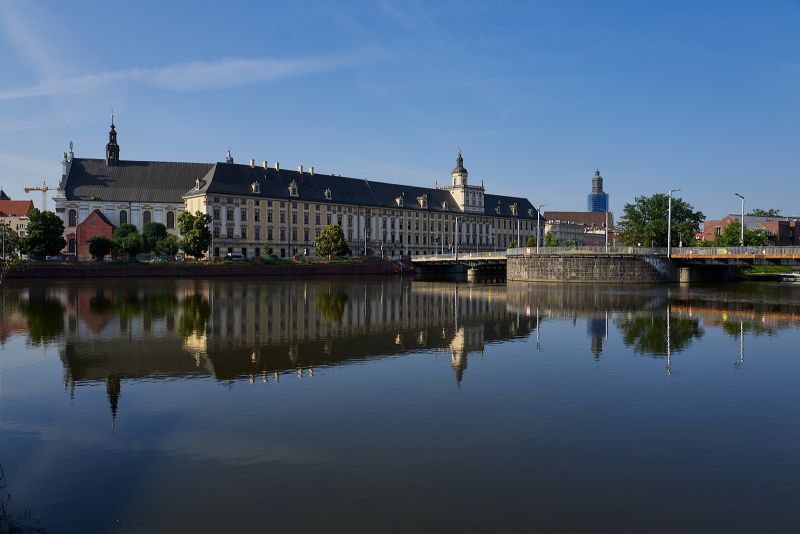
For centuries, Poles were part of the history of Wrocław, the capital city of Silesia.

Mediathek Sorted

Media library
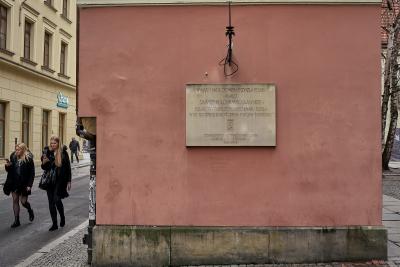
  • Memorial plaque in Wrocław  - Commemoration of the 55th anniversary of the end of the Second World War
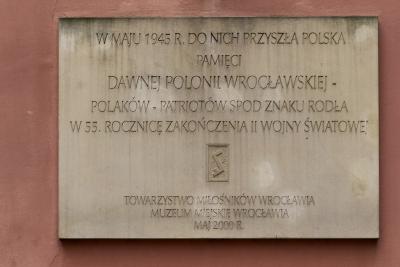
  • Memorial plaque in Wrocław  - Close-up
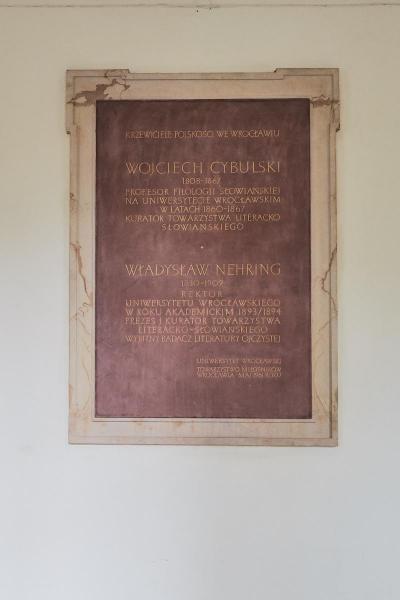
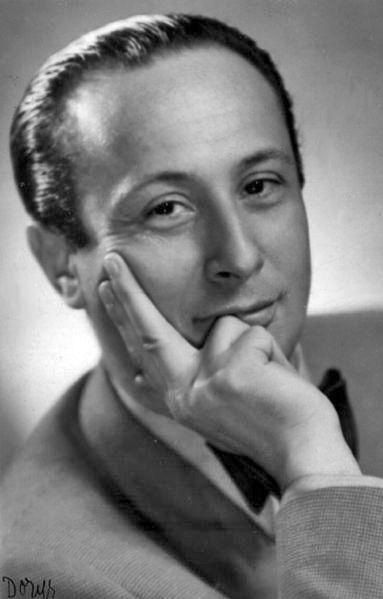
  • Memorial plaque for Wojciech Cybulski and Władysław Nehring - Main building of the University of Wrocław
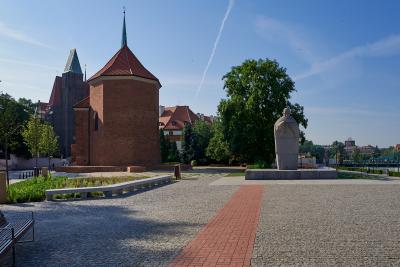
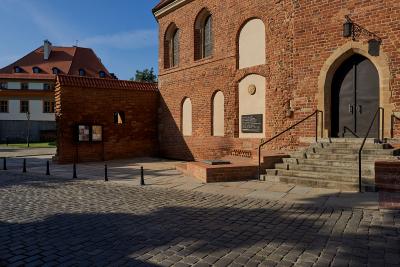
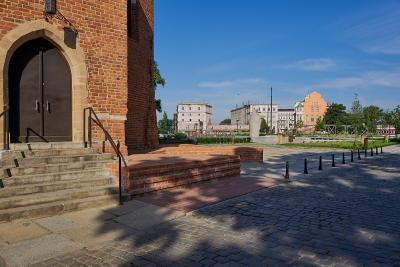
  • St. Martin's Church (Kościół św. Marcina) in Wrocław -
  • The monument to John XXIII. - Next to St. Martin's Church (Kościół św. Marcina) in Wrocław
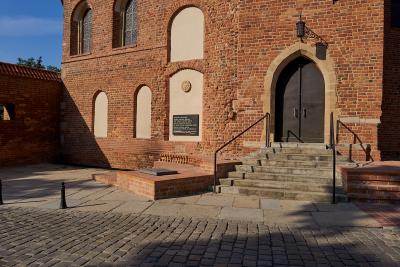
  • St. Martin's Church (Kościół św. Marcina) in Wrocław - The entrance and the memorial plaque and donor plaque
  • St. Martin's Church (Kościół św. Marcina) in Wrocław - Entrance
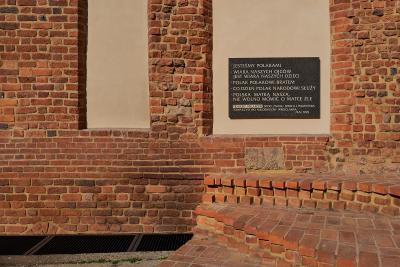
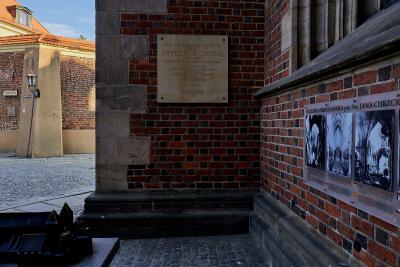
  • Memorial plaque with the ‘Truths of Poles under the Rodło Sign’ - Memorial plaque on St. Martin's Church, to the left of the entrance
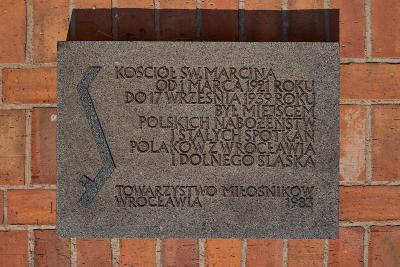
  • The memorial plaque was donated in 1983 by the ‘Towarzystwo Miłośników Wrocławia’ society - Floor-mounted, next to the entrance
  • The entrance to St. Martin's Church (Kościół św. Marcina) in Wrocław - On the right is the back of the monument to Pope John XXIII.
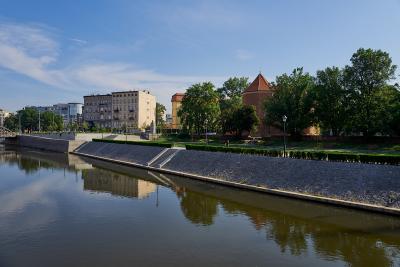
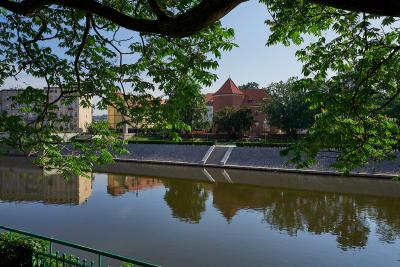
  • View of the St. Martin's Church (Kościół św. Marcina) in Wrocław - From the cathedral bridge over the Oder
  • View of the St. Martin's Church (Kościół św. Marcina) in Wrocław - From the opposite bank of the River Oder
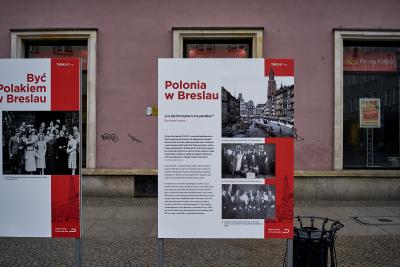
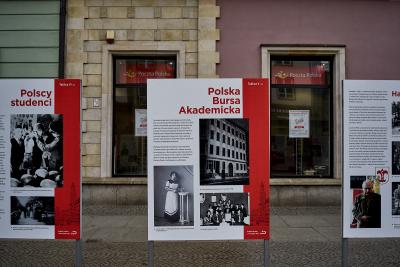
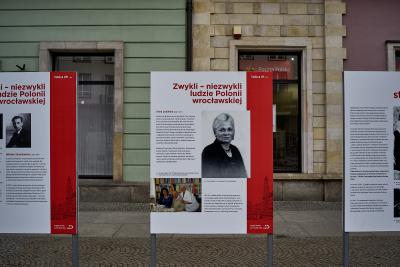
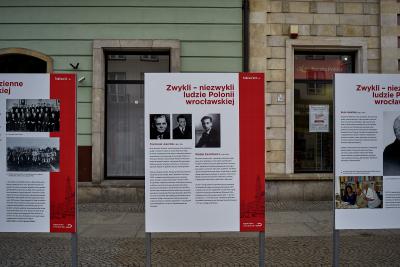
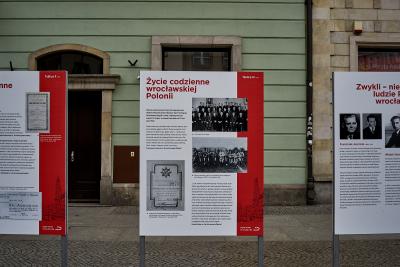
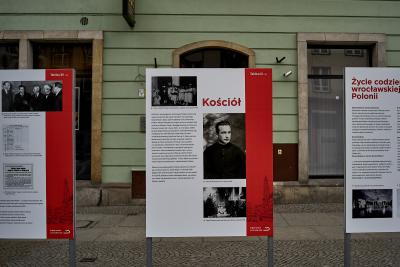
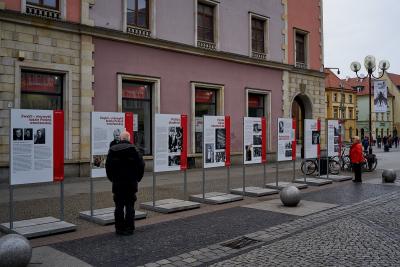
  • Exhibition in public space about the Polonia in Wrocław - Organised by the Centre for ‘Future and Remembrance’ (Ośrodek Pamięć i Przyszłość) in Wrocław. Panel I / XV.
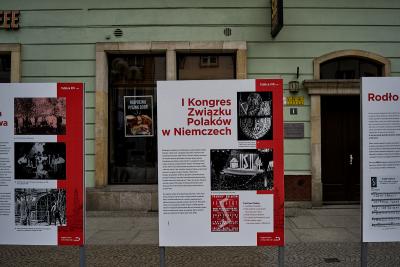
  • Exhibition in public space about the Polonia in Wrocław - Table V / XV
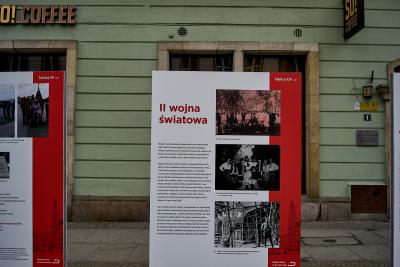
  • Exhibition in public space about the Polonia in Wrocław - Table VII / XV
  • Exhibition in public space about the Polonia in Wrocław - Table VIII / XV
  • Exhibition in public space about the Polonia in Wrocław - Table IX / XV
  • Exhibition in public space about the Polonia in Wrocław - Table XI / XV
  • Exhibition in public space about the Polonia in Wrocław - Table XIII / XV
  • Exhibition in public space about the Polonia in Wrocław - Table XIV / XV
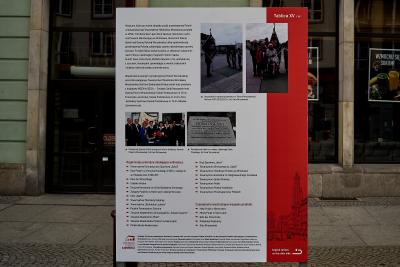
  • Exhibition in public space about the Polonia in Wrocław - Table XV / XV
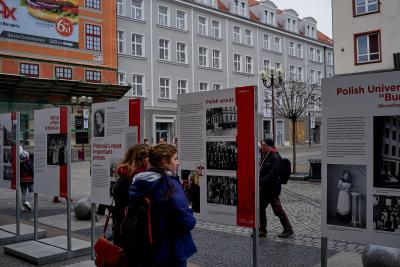
  • Public exhibition on the Polonia in Wrocław - Display boards and visitors
  • Exhibition in public space about the Polonia in Wrocław - Organised by the Centre for ‘Future and Remembrance’ (Ośrodek Pamięć i Przyszłość) in Wrocław
  • Exhibition in public space about the Polonia in Wrocław - Display boards and visitors, overview to the left
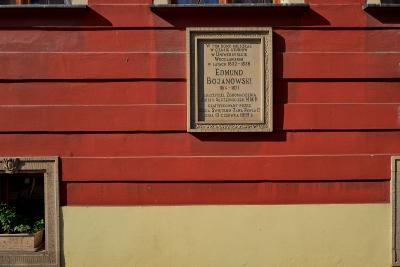
  • The memorial plaque for Edmund Bojanowski - Founder of the Congregation of the Handmaids of Mary Immaculate, beatified in 1999
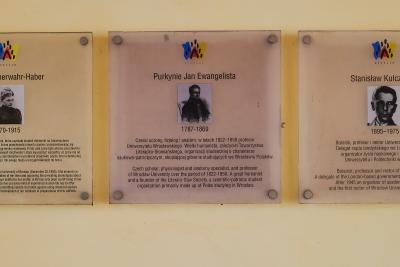
  • The memorial plaque for Jan Evangelista Purkyne - In the main building of the University of Wrocław.
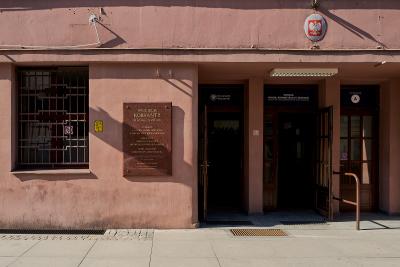
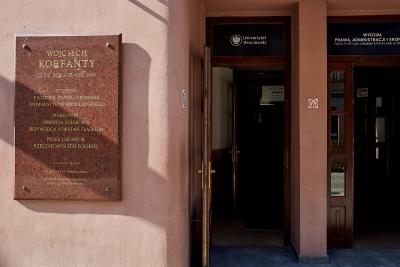
  • The Plaque for Wojciech Korfanty  - On the building of the Faculty of Law, Administration and Economics of the University of Wrocław.
  • The Plaque for Wojciech Korfanty  - Close-up of the contents of the commemorative plaque
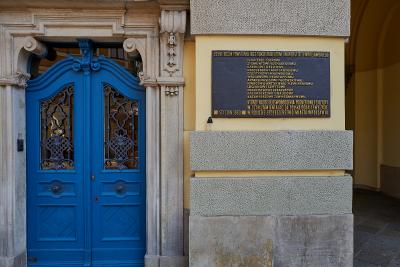
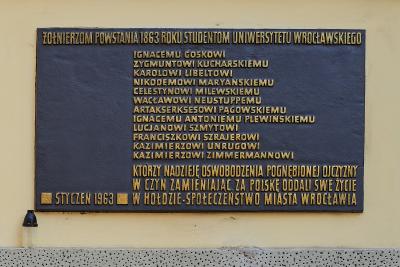
  • Memorial plaque to the Polish students who fought in the January Uprising of 1863 - At the portal on the university square near the Fechterbrunnen fountain
  • Memorial plaque to the Polish students who fought in the January Uprising of 1863 - On the main building of the University of Wrocław, donated in January 1963
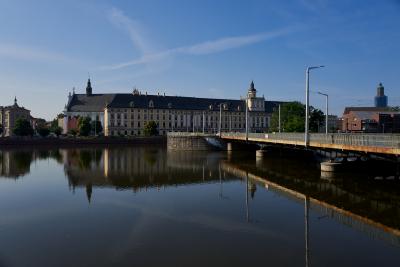
  • The main building of the University of Wrocław - The Oder River in the foreground
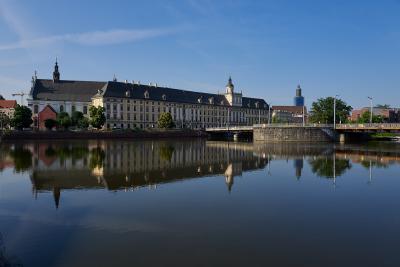
  • The main building of the University of Wrocław - View 2
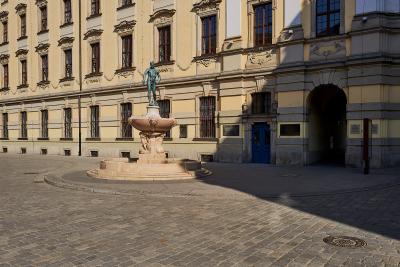
  • The fencing fountain  - On University Square in Wrocław.
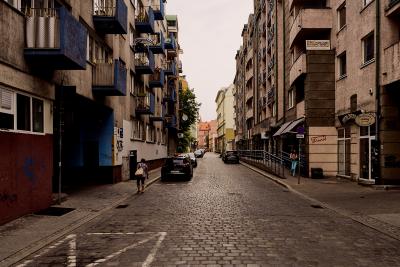
  • The street ‘Ulica Biskupia’ in Wrocław - Today's state
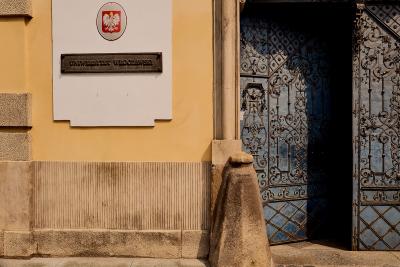
  • University of Wrocław - Sign next to the portal
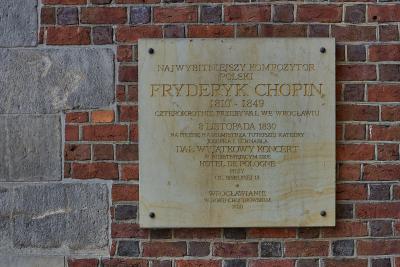
  • Memorial plaque of the concert by Fryderyk Chopin in Wrocław - On the Wroclaw Cathedral wall
  • The commemorative plaque was donated by the people of Breslau in 2010, the year of Chopin - On 8 November 1830, Chopin gave a concert at the Hotel de Pologne at the request of the local Kapellmeister of Breslau Cathedral.
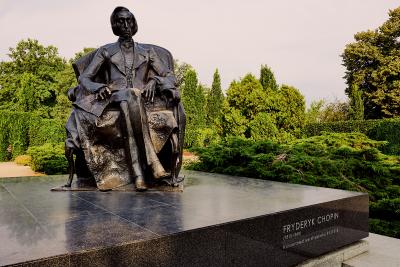
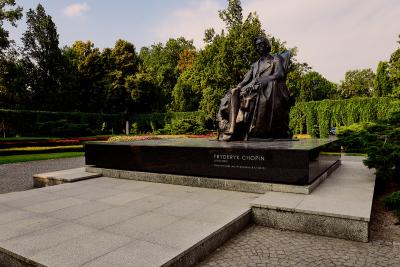
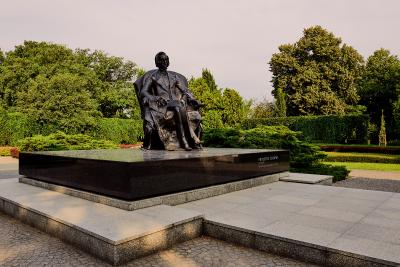
  • Monument to Fryderyk Chopin - South Park in Wrocław.
  • Monument to Fryderyk Chopin in Wrocław - Side view
  • Monument to Fryderyk Chopin in Wrocław - Close-up view of the statue of the composer.
For centuries, Poles were part of the history of Wrocław, the capital city of Silesia.

Spiritual life in the 19th century
 

Taking part in church services was not just of a strictly religious dimension, it was an important manifestation of spiritual life. Poles were already taking part in church services in Polish around the turn of the 18th and 19th centuries. They were organised on a regular basis for the worshippers of the Evangelical and Catholic churches. Evangelical services were held in the church of St. Christopher, whilst catholic services were held in the churches of St. Kreuz and St. Adalbert. 

“(….) The German and Polish languages”, wrote Hugo Kołłątaj at the beginning of the 19th century, “are so familiar to the residents that church services for all religions are even held in both languages”.

After 1820, an order passed by church authorities restricted services in Polish in churches belonging to both confessions. This was an extremely serious turn of events. As there were no Polish organisations at the time, using the Polish language in religious practice offered the only possibility to maintain the language. This new situation meant that Polish was soon no longer on an equal footing with German.

“Wrocław’s residents”, wrote Friedrich Nösselt, the author of a city guide from 1825, “are predominantly of German heritage. There are only a few Poles and so it is not easy to hear any language other than German being spoken. Many may perhaps be of Slavic origin but the residents have intermixed for so long now that it is not possible to differentiate between those who are of Old German origin and those who are Slavs”. (F. Nösselt, Breslau ..., Breslau 1825, p. 225).

In the middle of the 19th century, sermons and songs in Polish could only be heard in the collegiate church of the Holy Cross.